


Known differences exist in Alzheimer’s disease and related dementias (ADRD) prevalence across racial and ethnic groups. Previous studies have found that these groups tend to experience delayed diagnosis of ADRD that can lead to adverse health outcomes. Among the most common data sources used to study ADRD are Medicare Claims that rely on clinical diagnosis to identify ADRD. While these data may reflect receiving a diagnosis, they include misdiagnosed cases and potentially miss cases that go undiagnosed.
Data sources such as the Health and Retirement Study and the National Health and Aging Trends Study utilize cognitive assessments that have the advantage of more objectively identifying ADRD. However, cognitive assessment used to determine the presence of dementia can have biases that influence prevalence estimates across race/ethnicities.
Cognitive assessments used to determine the presence of dementia can have biases that influence prevalence estimates across race/ethnicities.
The National Health Interview Survey (NHIS) is a nationally-representative, publicly available data source that assesses self-reported cognitive limitations on an annual basis among a large sample of Americans. While self-reported cognitive limitations are inherently subjective and are not a measure of dementia, they do provide researchers with the ability to make national estimates of reported memory issues in populations across important demographic groups. Further, the NHIS specifically oversamples less represented groups to ensure adequate sample size to make stable estimates. Here we demonstrate use of NHIS to examine trends in self-reported cognitive limitations among older U.S. adults by race and ethnicity.
AUTHORS
Mark Iskandar
Jonathan Martindale, MHI
University of Michigan
Matt Davis, MPH, PhD
University of Michigan
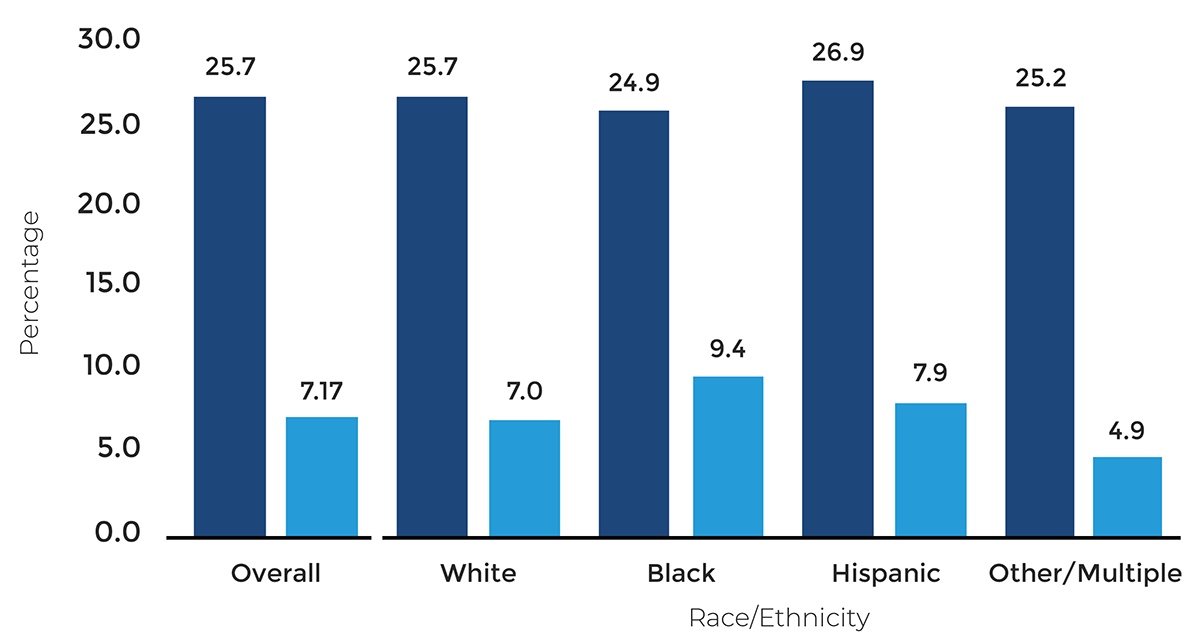
Figure 1
Prevalence of Older Adults Self-Reporting Difficulty Remembering or Concentrating vs. Prevalence of Diagnosed ADRD in Medicare FFS
 |
2017–2018 Proportion of Older Adults Self-Reporting Difficulty Remembering or Concentrating |
 |
2018 Medicare FFS ADRD Prevalence |
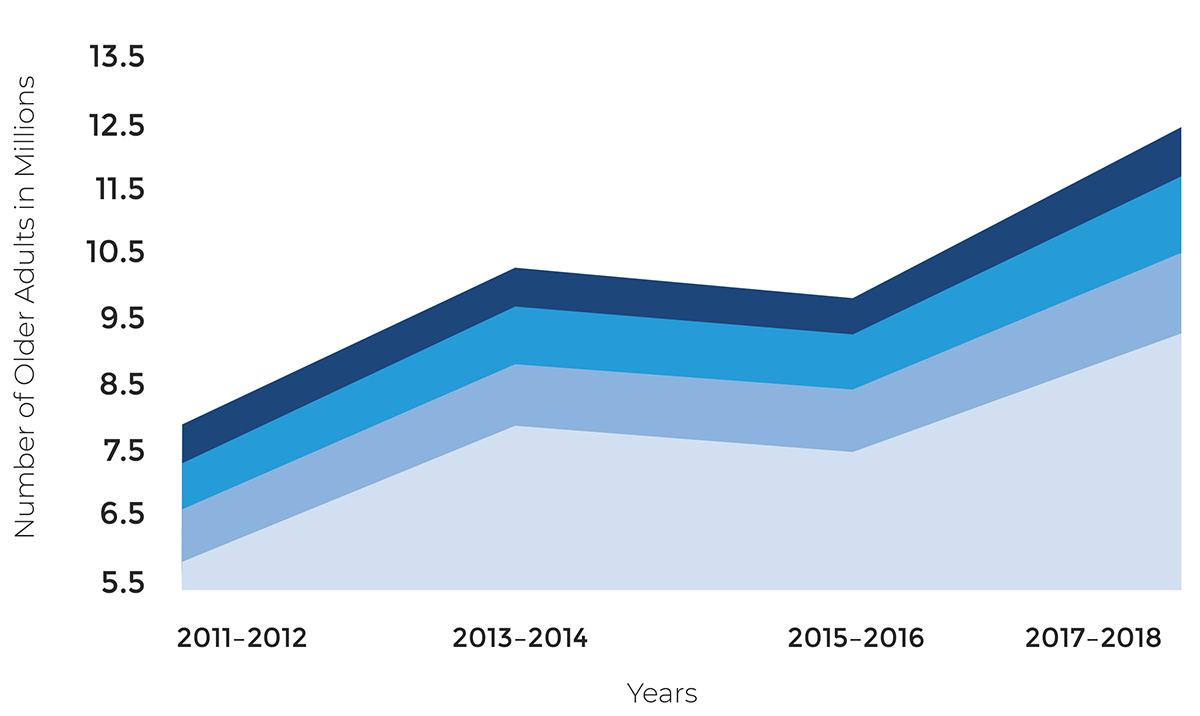
Figure 2
Estimated Number of Older Adults Self-Reporting Difficulty Remembering or Concentrating
 |
White |
 |
Black |
|
Hispanic |
|
Other/multiple |
What we did.
In this cross-sectional study we used data from the 2016–2019 NHAMCS to determine the most common reasons for visit and diagnoses associated with ED visits by ADRD status. All analyses were restricted to adults who were 65 years or older at the time of the survey and estimates were extrapolated to represent the U.S. older adult population. While there can be up to five reasons for visits coded, we selected the first reason for visit code which is the medical chief complaint or “most important” reason for visit reported by the patient and/or proxy reflecting their motivation for seeking medical care. Additionally, NHAMCS includes up to five diagnoses related to the visit which are based on the International Classification of Diseases, 10th Revision, Clinical Modification (ICD-10-CM) codes. This analysis focuses on the first listed and designated primary diagnosis related to the visit.
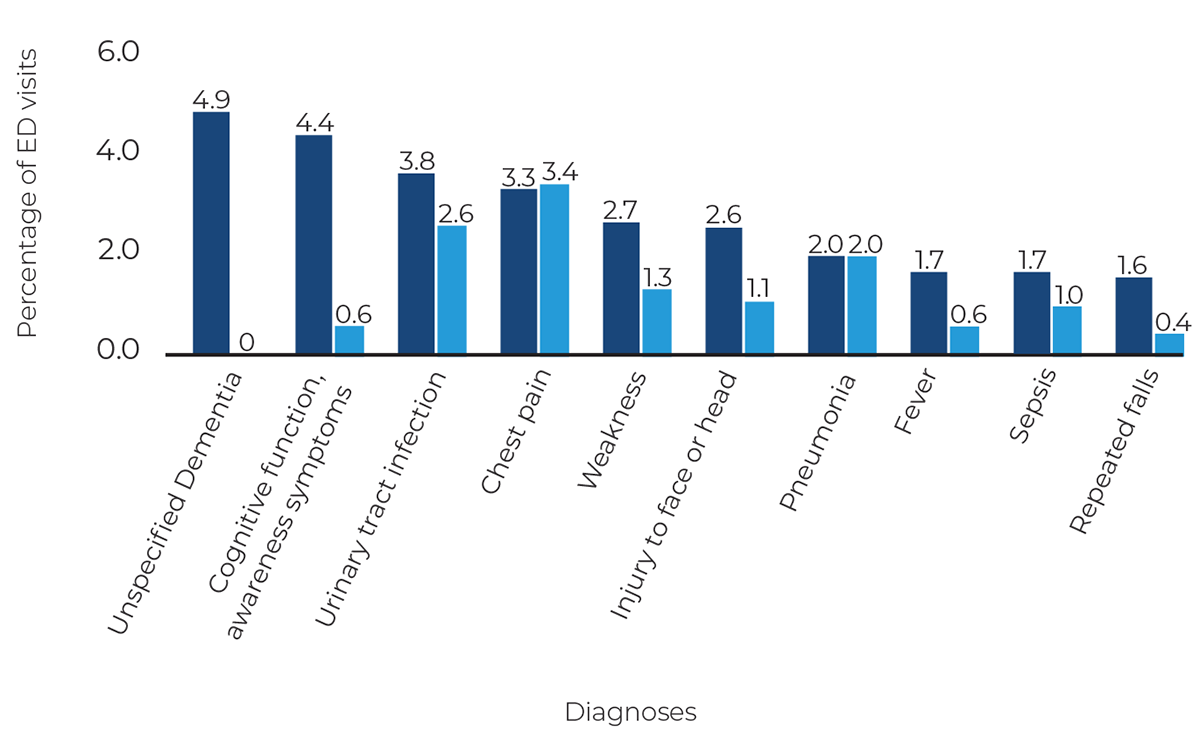
Figure 2
Top 10 primary diagnoses among those with ADRD
|
Patients with ADRD |
|
Patients without ADRD |
What we found.
- Among older Americans in 2017-18, despite only 7.1% having an ADRD diagnosis in Medicare claims, 25.7% report a cognitive limitation.
- By race/ethnicity, the prevalence of self-reported cognitive limitations varied little (ranged from 24.9% to 26.9%) despite larger variability in diagnosis.
- The estimated number of older Americans reporting cognitive limitations has grown from 8 million in 2011–12 to 12 million in 2017–18—a 50% increase.
- The increased number of cases of reported cognitive limitations is related
to the population of older adults getting larger in the United States.
- The increased number of cases of reported cognitive limitations is related
What does this mean for ADRD research?
This report demonstrates the use of a national health survey to assess self-reported cognitive limitations by race/ethnicity. A distinct advantage is the ability to generate national estimates and the consistent NHIS assessment of limitations across time. While self-reported limitations are not as objective as direct cognitive assessments, there may be advantages for populations known to less likely to be diagnosed and in tracking general population trends.
In the U.S. the number of older adults with self-reported cognitive limitations is increasing significantly
- These analyses align with other estimates that show a growing number of Americans with ADRD due to aging of the population and underscores the importance of planning future resources.
Approximately 25% of older adults report a cognitive limitation
- Experiencing a limitation is not the same thing as a diagnosed dementia. However, the overall high prevalence of a self-reported cognitive issues has important ramifications for population health.
- This may underscore the importance of ongoing cognitive assessment in clinical practice to help ensure timely diagnosis of ADRD.
The data used to create this brief report can be found here.